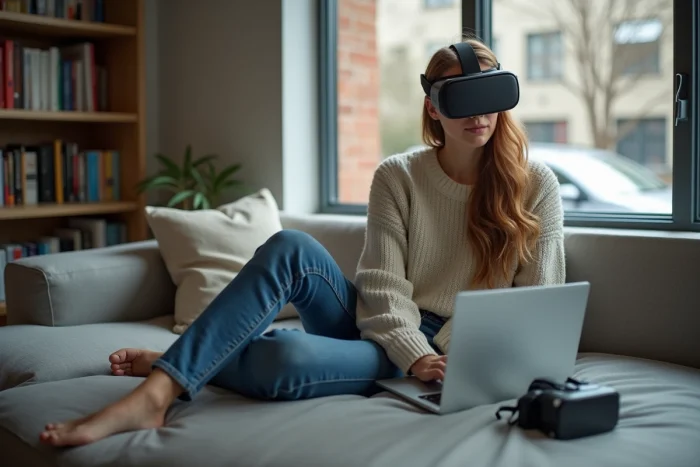
Since 2020, the attendance at virtual reality tourist sites has increased by more than 70% according to the World Tourism Organization. Yet, the majority of travelers still prefer physical experiences, despite the rise of immersive digital solutions.
Some operators note that the duration of a virtual visit rarely exceeds 25 minutes, which is significantly less than the time spent during an on-site visit. This observation highlights the concrete questions surrounding the potential of these technologies to complement, or even replace, the traditional experience.
Virtual tourism and virtual reality: where do we stand today?
Virtual reality and augmented reality are transforming the way we explore the planet. In constant evolution, they offer unprecedented approaches to virtual travel and change our relationship with significant heritage sites. From Paris to Tokyo, platforms are multiplying immersive experiences: reconstructed museums, modeled monuments, entire neighborhoods accessible in just a few clicks. Artificial intelligence brings a new level of detail to reconstructions, offering guided tours led by avatars and even personalized routes based on individual preferences.
Virtual tourism primarily attracts by its ability to eliminate distances and provide instant access to masterpieces or landscapes that might otherwise be inaccessible. However, it raises the question of the authentic dimension of the experience. Virtual visits are ideal for preparing for a trip, deepening one’s knowledge of a place, or satisfying immediate curiosity. Yet, they do not replace the sensory richness of true exploration or the unpredictability of encounters on-site. The debate around the advantages and disadvantages of virtual travel is not limited to a dichotomy between tech enthusiasts and lovers of reality: it reflects the diversity of expectations, between a desire for innovation and a need for grounding.
Here is what these technologies offer today, but also what they leave aside:
- Immersive experience: access to unprecedented content, historical simulations, interactive visits.
- Limitations: lack of direct exchanges with other people, often standardized paths, difficulty in conveying the real atmosphere of a place.
The rise of these new offerings, driven by augmented virtual reality and algorithms, questions the place of the modern traveler. Between the allure of novelty and the quest for meaning, virtual tourism travel becomes a testing ground, at the crossroads of cutting-edge technologies and collective memory.
What advantages for travelers and industry professionals?
The wave of immersive experiences is redefining what it means to travel. For travelers, the virtual simplifies trip planning: discovering sites, exploring museums, visiting monuments without facing budgetary or logistical constraints. Accessing virtual visits of monuments allows one to traverse the world, prepare an itinerary in peace, or even organize a physical trip more serenely.
Depending on the audience, the benefits take different forms:
- For curious travelers: access to remote corners of the globe, overcoming geographical obstacles, discovering places often closed to the general public.
- For professionals: showcasing their heritage, attracting new visitors, extending the connection with the audience long after the actual visit.
This new usage transforms trip planning. Booking, comparing, virtually exploring: everything integrates into the overall experience, making the choice simpler and more informed. For tourism stakeholders, the advantages of virtual travel translate into the emergence of new tools designed to anticipate needs and spark new desires.
Virtual trips do not replace the richness of a real journey, but they open up many other perspectives. Explore, test, dream, without a passport or ticket: the planet invites itself into your home for a few moments. Virtual exploration enriches the connection to heritage, culture, and territory. With each advancement, a new geography of travel emerges, where the boundary between lived experience and memory blurs a little more.
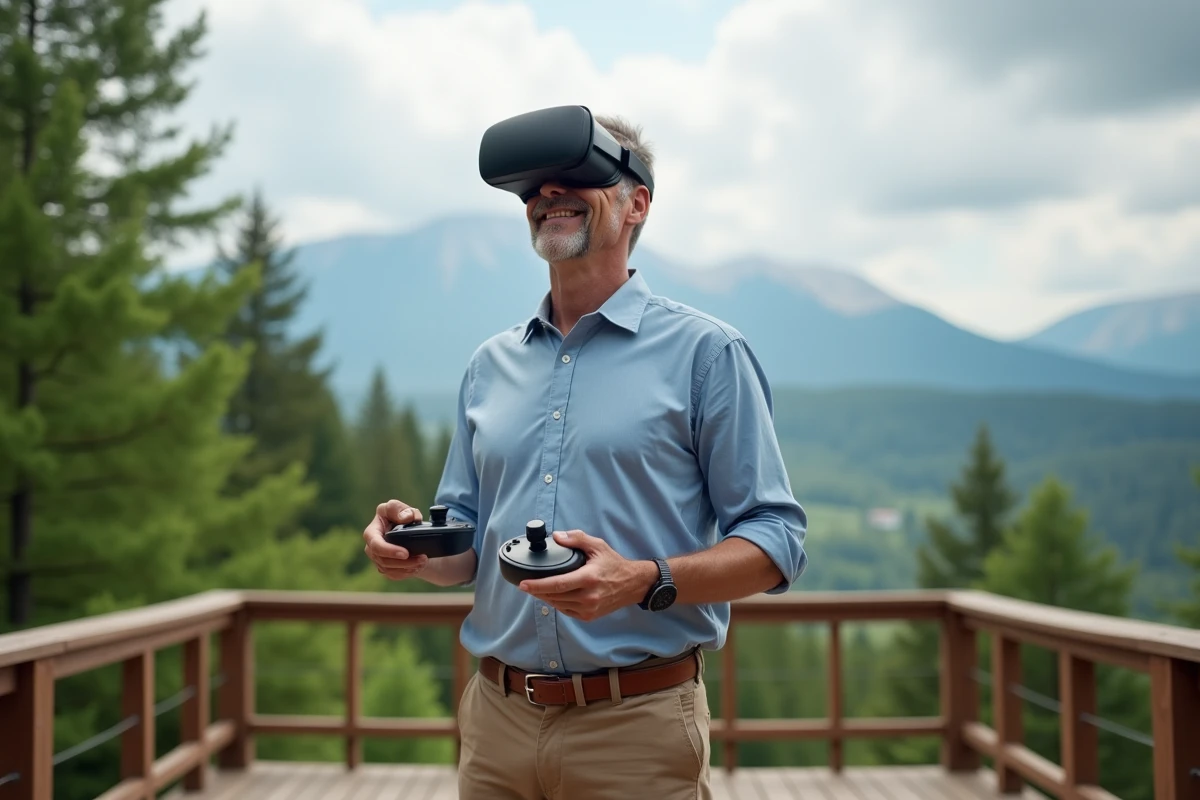
Current limitations and avenues for a more authentic experience
While virtual reality and virtual trips fascinate with their promise of exploring the world without moving, they face several limitations. The most obvious: the impossibility of recreating the warmth of human interactions. Sharing a glance, talking with a local, getting lost in a crowd, or immersing oneself in the atmosphere of a market: all moments that virtualization leaves aside.
Virtual visits struggle to convey the sensory richness of a real journey. The sounds, scents, and spontaneity of encounters are absent behind the screen. The pace imposed by technology sometimes stifles wandering and limits surprises. The experience, often guided, smooths out contrasts and softens reality.
Avenues for a richer experience
To overcome these obstacles, several avenues are beginning to emerge:
- Enhancing human interactions through artificial intelligence and augmented reality, to enable personalized exchanges from a distance.
- Imagining adaptive scenarios that adjust to user choices, to make the virtual visit more dynamic and less predictable.
- Enriching the sensory dimension, for example through haptic devices, to restore a physical aspect to virtual exploration.
The boundary between real travel and immersive experience persists, but as technology progresses and humanity reclaims its place at the heart of the system, we glimpse the emergence of more convincing hybrid formats. Reinventing virtual tourism travel as a complement, rather than a replacement, is emerging as one of the major directions to follow. The question remains whether tomorrow, the memory of a virtually visited place will rival the memory of a lived adventure, breath by breath.