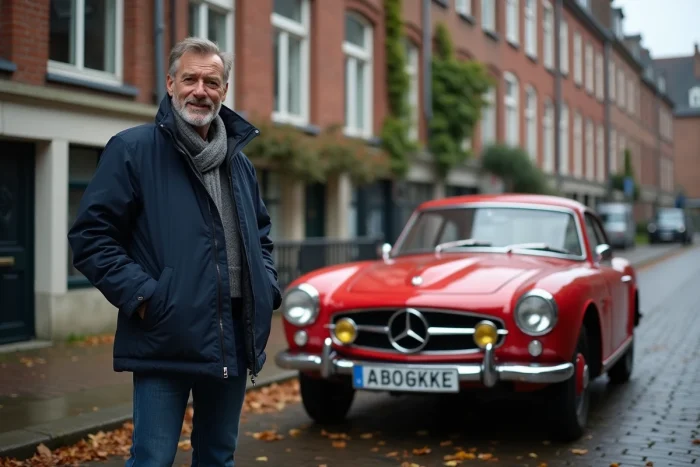
A detail that stands out as soon as you cross the Belgian border by car: the license plate, with its red characters on a white background, looks unlike any other in Europe. While almost all neighboring countries have switched to black or blue, Belgium has maintained this visual imprint without ever changing it since 1899. Not out of whim, but through a series of administrative choices and technical constraints, never questioned, even as the automotive landscape in Europe changed.
Year after year, the red color persists. Reforms, changes in the vehicle fleet, new standards: nothing has managed to dislodge this unique detail. Collectors, enthusiasts of legendary models, all wonder about this exception that spans decades.
Why the Citroën Traction, Méhari, and Chausson buses have become automotive icons
They traverse generations without aging. Citroën Traction, Méhari, Chausson buses: these vehicles are not just means of transport; they embody a piece of history, a certain idea of style and European innovation. The Traction, launched in the 1930s under the leadership of André Citroën, impresses with its monocoque body and front-wheel drive. Solid and elegant, it establishes itself as a reference far beyond French borders.
The Méhari arrived at the end of the 1960s, made entirely of ABS plastic and simplicity. You see it on the beach, in the countryside, with adventurers and vacationers alike. Its modularity makes it irreplaceable for freedom lovers. As for the Chausson buses, they marked the post-war era: rounded shapes, reliability beyond compare, extraordinary capacity. Generations of travelers remember their silhouette on the roads of France and Europe.
Their common trait: an identity that does not fade. These models are recognizable among all, driven by their design and the passion of those who restore them. In this universe, the Belgian license plate intrigues. Many wonder why Belgian license plates are red: a question that reveals the weight of habits and the regulatory uniqueness of the country.
Astonishing stories: anecdotes, innovations, and manufacturing secrets of these legendary models
The Belgian license plate is not just a red hue on a white background. Behind this choice, a set of variations and subtleties has developed. Since 2014, personalization has been possible: for 1000 euros, anyone can request their own combination, provided they adhere to strict rules. For example, it is impossible to use certain letters at the beginning of the plate: A, E, P, and CD are excluded. Always present, the country code “B” appears on the left, flanked by the European flag.
To better understand the diversity of the system, here is an overview of the main categories of plates in Belgium:
- Special plates: transit, garage, military, diplomatic, royal. Each serves specific purposes, with a specific format and color. The diplomatic plate starts with CD, while the royal one is limited to a series of numbers reserved for the royal family.
- Sectoral plates: motorcycle (M), trailer (Q), moped (S), merchant (Z), agricultural (G), export (X), temporary (W).
Manufacturing alternates between aluminum and plexiglass, depending on needs. Dimensions also vary: 520 x 110 mm for most cars, 210 x 140 mm for certain two-wheelers. From ordering on Plaque.be to deregistration by Bpost, the Vehicle Registration Directorate (DIV) manages each step.
Anecdotes abound. Debates about the color have animated both Flanders and Wallonia: each region had its claims. Some plates dedicated to specific uses, like transit or garage, are displayed in green on a white background; others in black or blue, depending on the function. Behind this mosaic lies a highly codified system, where Belgian uniqueness prevails, far from European standards.
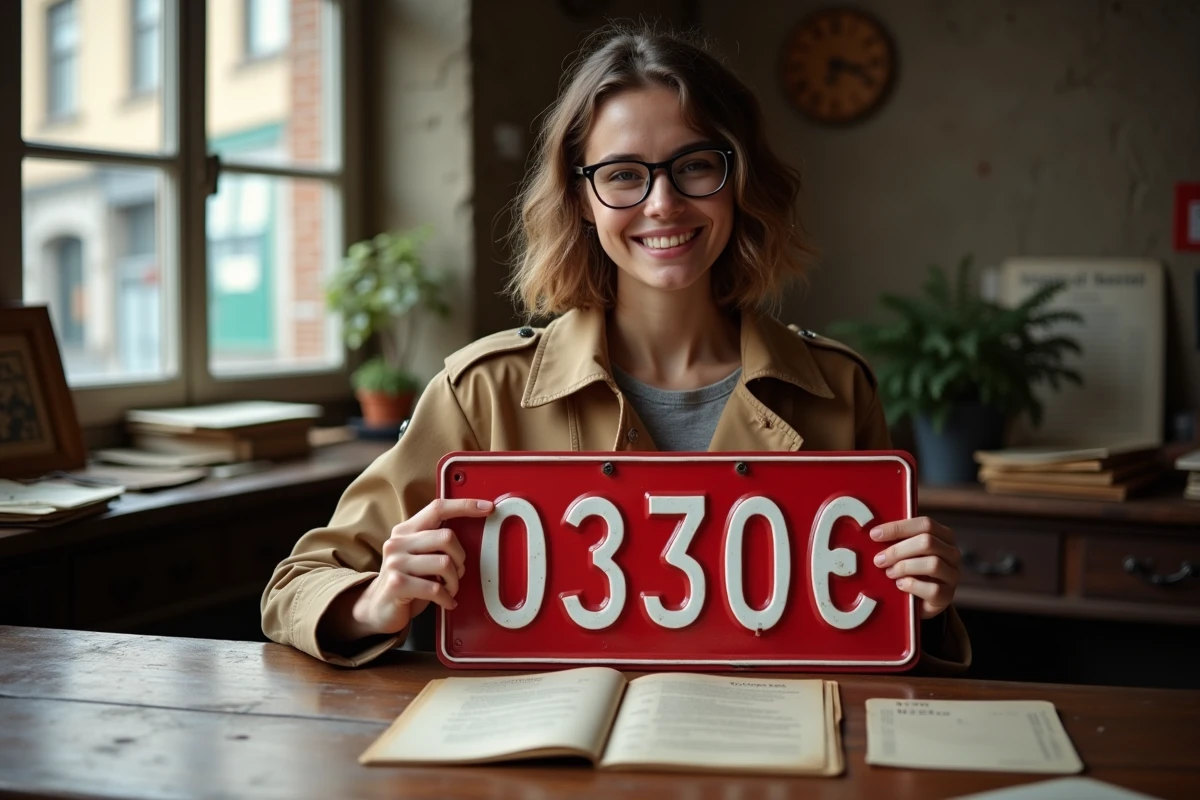
What legacy for today’s enthusiasts? Sharing, restoring, and passing on the memory of these vehicles
For many collectors, the Belgian license plate is not just a simple administrative detail. It becomes a full-fledged piece of rolling heritage. Each inscription, each series of numbers or letters tells a story: date of first registration, location, passing of technical inspection, deregistration. One follows the life of the vehicle, from factory output to restoration on the workbench of an enthusiast.
Behind the metal or plexiglass lies a mechanical memory. Restoring a classic car is not just about getting an engine running: it also involves finding the original plate, sometimes in its historical format, with its red characters, as required by the technical inspection. The registration certificate and the certificate of registration attest to this link with the past. The Belgian state ensures the harmony of the system and the traceability of each vehicle.
In some specialized circles, transmission occurs through the exchange of archival documents, advice on requesting specific plates, or stories about regulatory developments. Even in the age of automatic radars and dematerialization, the passion remains: preserve, restore, transmit. A glance at a red plate, under the light of a gathering, is enough to feel the vibrancy of a whole story ready to hit the road again.