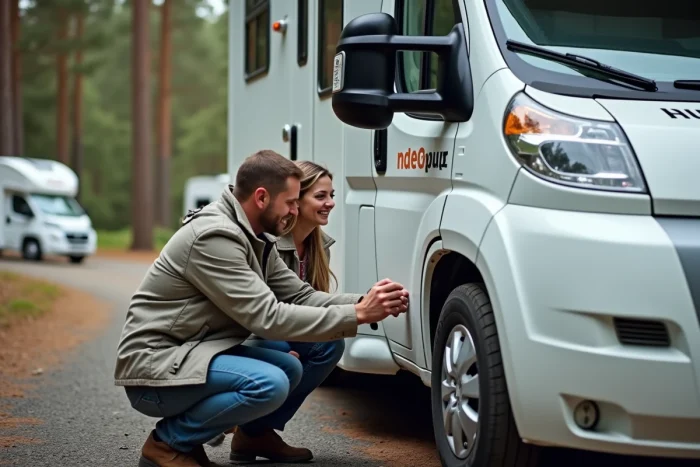
Naming your motorhome is a practice that goes beyond a simple nod among enthusiasts. On forums and groups for motorhome owners, the question regularly arises, and the responses reveal an emotional connection to the vehicle that shapes how one travels, how one talks about it, and even how one physically personalizes it.
Motorhome Name and Owner Identity: What Practices Reveal
In Facebook groups dedicated to French-speaking motorhome owners, discussion threads about choosing a name generate hundreds of responses. Suggestions range from classic human names (Germaine, Marcel, Bertha) to puns related to the model or brand of the vehicle.
What emerges from these exchanges is that the chosen name often reflects the history of acquiring the vehicle. A first motorhome purchase after retirement does not evoke the same register as a van converted by a couple in their thirties. Vintage-sounding names (Josette, Fernand) dominate among owners of older vehicles or capucine profiles, while compact vans more often inherit short, anglicized names or names linked to vanlife culture.
Asking what name to give your motorhome ultimately comes down to defining the relationship you have with it: road companion, tool of freedom, or extension of home.

Custom Stickers and Name Marking: From Nickname to Visible Object
The name of the motorhome is no longer confined to the oral. A clear trend is emerging: motorhome owners materialize the name with stickers combining text and graphic motifs. Compass, mountain silhouette, GPS coordinates of a travel location, the vehicle’s name is integrated into a visual composition stuck on the bodywork, the cell door, or the rear window.
Specialized websites for vinyl stickers offer online configurators where you can choose the font, color, and associated symbol. The result ranges from discreet white lettering on a dark background to a mural covering the entire side of the vehicle.
What Marking Changes in Parking Area Interactions
A named and visually identified motorhome becomes a landmark. In service areas and campgrounds, vehicles with a visible name spark conversation. Several motorhome owners report that their custom sticker served as an excuse for exchanges with other travelers, even leading to reunions during later trips.
This social dimension is not trivial. It contributes to a community culture where the named vehicle functions as a mobile business card.
Vintage Decorative Plates and Personalized Objects: The Name as a Gift
The name of the motorhome has overflowed from the vehicle itself to settle into the world of merchandise. Online shops specializing in leisure vehicle accessories now offer a whole range of customizable items:
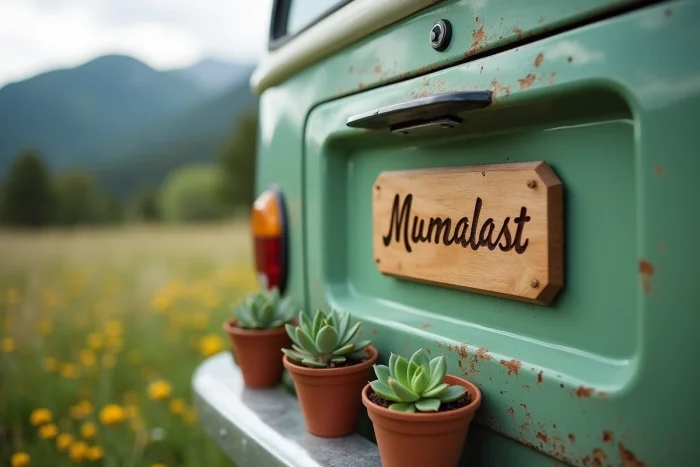
- Vintage-style metal plates or “Route 66” where the name of the motorhome can be engraved, used as interior decoration of the vehicle or under the awning
- Mugs, doormats, and welcome signs bearing the vehicle’s nickname, often given as gifts on the occasion of retirement or a first purchase
- Miniature neon signs or enamel plates featuring the name and a travel-related visual (compass, map, landscape)
This shift is revealing. The name of the motorhome has become a shared identity marker with loved ones, and no longer just a word used among oneself. It is given as a gift, displayed, showcased. The “gift ideas” sections of specialized motorhome websites highlight these customizable items, indicating that demand is shaping a standalone commercial offer.
Finding a Motorhome Name: Concrete Ideas That Work
Online name generators dedicated to leisure vehicles exist, but their suggestions often remain generic. The names that “stick” over time are those that anchor in a real detail of the vehicle or the journey.
Several approaches recur in the testimonies of owners:
- Starting from a physical characteristic of the vehicle: color, shape, engine noise, endearing flaw. A white, round motorhome becomes “Meringue,” a noisy van inherits “Grognon”
- Drawing inspiration from the first trip or the place of purchase. The geographical name creates a narrative link with the vehicle’s history
- Playing on the model or brand: transforming “Ducato” into “Duc,” “Transit” into “Transe,” “Fiat” into a personal acronym
- Choosing a period name corresponding to the year of manufacture of the vehicle, a common approach among owners of vintage models
A common mistake is to seek an “original” name disconnected from the vehicle. A name that tells nothing tends to be abandoned after a few months. The nicknames that last are those that are pronounced naturally, as one would call a pet by a diminutive born from habit.
Adapting the Name to the Type of Vehicle
A compact van converted for vanlife does not call for the same register as a several-meter integrated model. Short and dynamic names (a maximum of two syllables) fit better with compact vehicles used for sporty road trips. Longer names or classic first names are more associated with family motorhomes or capucine profiles intended for long stays.
This correspondence between the size of the vehicle and the style of the name does not follow any formal rules, but field feedback converges on this point: the name works when it “sounds” like the vehicle is driven.
Whether you stick a sticker on the bodywork, give a vintage engraved plaque, or simply whisper the name while turning the ignition key, naming your motorhome remains a simple gesture that transforms a utility vehicle into a travel companion. The choice of name, however, should not be forced: it often comes naturally, at the turn of a first breakdown or a sunset at a rest area.