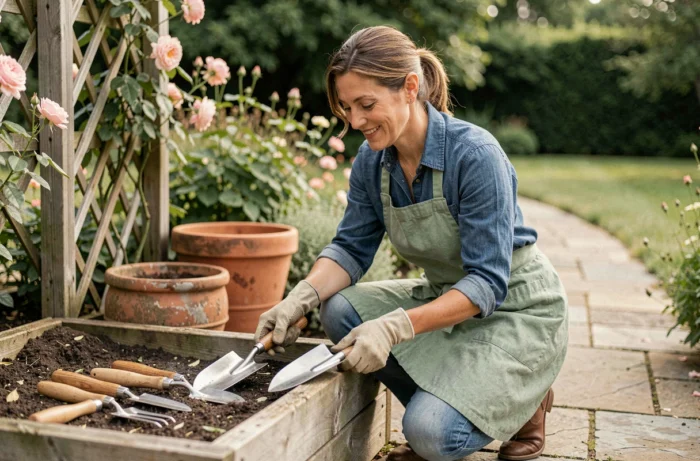
A pleasant garden relies less on the quantity of tools purchased than on the consistency between the chosen equipment and the actual constraints of the land. Surface, soil type, exposure, access to water: these parameters determine the type of useful equipment and those that will end up unused in a cluttered garden shed.
Rainwater harvesting and watering: the first area to prioritize
Competitors rarely address the issue of water as a criterion for equipment choice. Yet, it is the factor that conditions everything else: without an appropriate watering strategy, even a well-planted garden can deteriorate in just a few weeks of drought.
Drip irrigation combined with mulching significantly reduces water consumption compared to traditional spray watering. Before investing in a timer or an expandable hose, the first question concerns the available water source and local restrictions, which vary greatly depending on the level of drought in each department.
An outdoor rainwater collector intended for garden watering generally does not require any special declaration, as long as it is not connected to the home’s internal network. However, an installation connected inside (toilets, washing machine) requires a strict separation from the drinking water network and, depending on the setup, a declaration at the town hall. The type of roofing also matters: materials containing lead or asbestos render the collected water unsuitable, even for watering.
To find the garden equipment on Tout pour le Jardin that fits this logic, it is better to start with the desired watering system and then work up to compatible accessories, rather than buying tools piecemeal.
Soil and surface: adapting tools for working the land
A clayey and compact soil is not worked with the same tools as sandy and light soil. This distinction seems obvious, yet most guides offer an identical list regardless of the context.
Heavy or compacted soil
On clay soil, a grelinette (or biogriffe) allows for aeration without turning the layers. The classic fork-spade remains useful for occasional planting tasks, but systematically turning clay soil destroys the biological structure and worsens compaction in the medium term.
For this type of terrain, prefer tools with tines rather than flat blades. A claw or garden rake breaks up clumps after using the grelinette, without disproportionate effort.
Light or sandy soil
On draining soil, heavy tools are unnecessary. A hoe is sufficient for surface weeding, and a simple trowel covers most planting needs. The investment then shifts towards mulching and organic amendments, not towards soil working tools.
- Clay soil: grelinette, fork-spade, claw rake, reinforced wheelbarrow for amendments
- Sandy soil: hoe, trowel, lightweight rake, more frequent but smaller amounts of watering
- Mixed or loamy soil: a versatile set (flat spade, rake, pruner) covers most tasks without over-equipping
Storage and garden shed: organizing space for longevity
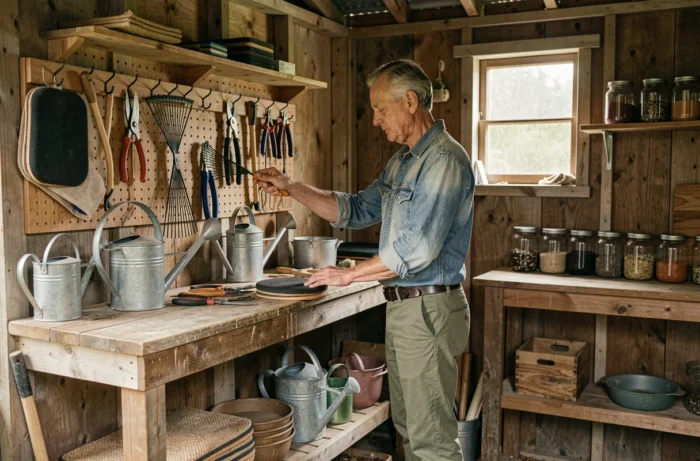
Buying good equipment without planning for its storage leads to accelerated wear. An exposed tool loses several years of lifespan, regardless of its purchase price.
The garden shed does not need to be large. A waterproof storage box is sufficient for a small space with a few hand tools. For a medium-sized garden, a shed of about two square meters on the ground can accommodate common tools, amendment products, and the winter watering system.
Two often-overlooked criteria at the time of choice:
- Ventilation: a closed shed without air circulation promotes condensation and rust, especially on metal blades
- Accessibility: a shed placed at the back of the garden discourages regular maintenance of tools, which end up being left outside after use
- The shed floor: an elevated floor or concrete slab protects better than a simple one placed on bare earth, which brings up moisture by capillarity
Pergola, terrace, and furniture: equipping outdoor living spaces
A pleasant garden is not just a cultivated space. The relaxation area (terrace, dining corner, shaded zone) also requires thoughtful equipment choices.
A bioclimatic pergola with adjustable slats offers superior comfort to a retractable awning, but its cost and footprint reserve it for sufficiently sized terraces. For smaller spaces, a triangular shade sail attached to masts or the facade serves the same purpose at a lower investment.
Garden furniture is chosen based on exposure and frequency of use. Aluminum resists moisture and is lightweight, making winter storage easier. Wood (acacia, eucalyptus) ages better on a sheltered terrace than on a lawn exposed to rain. Wicker resin remains a good compromise for daily use, provided the quality of the weaving and the sturdiness of the internal structure are checked.
Equipment maintenance: the action that extends lifespan
A cleaned and sharpened pruner after each session cuts better than a high-end model left neglected. Regular maintenance of blades and handles determines the actual longevity of the tool, much more than the brand or price.
After each use, a dry cloth on the metal parts is enough to remove damp soil. Once per season, sharpening with a flat file and a thin layer of linseed oil on wooden handles prevent rust and splinters. This ritual takes a few minutes and avoids having to repurchase equipment every two or three years.
The choice of equipment for a practical garden boils down to a simple logic: start from the constraints of the land (water, soil, surface, storage), select the equipment suited to these parameters, and then maintain it. A well-equipped garden with six durable tools is more useful than a shed filled with unsuitable equipment.