A blood pressure monitor that repeats its inflation and deflation cycle: this scene is not a bug, nor an excess of algorithmic zeal. It is proof of a device that applies, to the letter, its internal instructions to ensure trustworthy figures. Yet, surprise often lurks, especially when the cuff starts to inflate again while one expects to see the final reading displayed.
This phenomenon is not random. It occurs when certain variables disrupt the measurement: irregular heartbeat, involuntary movement, or inappropriate cuff positioning. The blood pressure monitor takes no risks: it restarts its procedure to avoid any approximate results. This, far from being a flaw, enhances the reliability of the measurement and prevents deviations during home self-monitoring.
Why can a blood pressure monitor inflate multiple times during a reading?
Many wonder: Why does the blood pressure monitor inflate multiple times during a single reading? Behind this scenario lies a series of automatic checks. With each cycle, the device adjusts the cuff pressure to accurately capture the arterial signals useful for calculating systolic pressure and diastolic pressure.
This repetition can be explained by several factors. First, the oscillometric method, used by the majority of electronic blood pressure monitors, requires the cuff to reach a sufficiently high pressure to detect the pulse wave. If the threshold is not reached, or if a movement distorts the data, the device restarts. Even a clumsy placement or a poorly adjusted cuff can skew detection, hence the multiplication of cycles.
Here are typical situations where the blood pressure monitor restarts one or more cycles:
- Movement during the measurement: blood flow is no longer measured correctly when the arm moves.
- Poorly positioned cuff: too loose or too tight, it disrupts the capture.
- Insufficient batteries: if the device lacks power, it interrupts or slows down the cycle, which can cause an unexpected restart.
Ultimately, the repetition serves a single purpose: to ensure reliable measurements and limit any errors. Some models even signal the problem via codes or clear messages, inviting you to restart under better conditions. This vigilance is not a whim of the machine, but a constant effort to provide accurate results with every use.
Understanding the operation of different types of blood pressure monitors
Blood pressure measuring devices are divided into two main categories: manual and electronic models. Each has its particularities, advantages, and limitations.
The manual blood pressure monitor operates using the auscultatory method, utilizing a stethoscope. The professional inflates the cuff, monitors the pressure on the manometer, and then listens for the famous Korotkoff sounds. This technique requires training, a good ear, and assured technique. In skilled hands, it delivers reliable and precise results.
The massive arrival of electronic blood pressure monitors has simplified the process. Whether designed for the arm or the wrist, these devices use the oscillometric method: they detect the oscillations of the arterial wall during the deflation of the cuff. The handling is quick, accessible to everyone, but the slightest disturbance, abrupt movement, or poor positioning can lead to a double inflation cycle to secure the measurement.
Here are the specifics of the two main types of models:
- Arm model: bulky but known for its accuracy, it requires the cuff to be properly placed above the elbow crease.
- Wrist model: compact and convenient, it requires the arm to be positioned at heart level to avoid discrepancies.
The latest electronic models even offer a dedicated mobile app for tracking measurements, analyzing trends, and sometimes automatically sending data to the doctor. Tools evolve, but the quality of the measurement still depends on attentive and methodical use.
Practical tips to avoid common errors during measurement
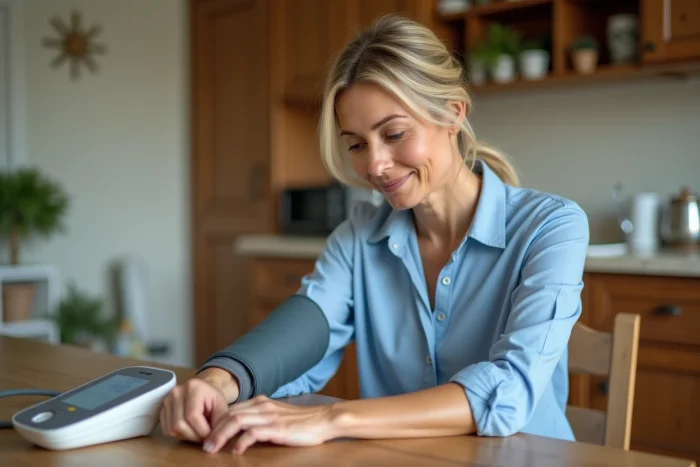
To obtain a reliable blood pressure measurement, a few simple habits are essential. Settle in a quiet place, away from any commotion. Sit on a chair, back straight, feet flat on the floor. Avoid crossing your legs. Rest your relaxed arm on a table, palm facing up, at heart level. This posture reduces fluctuations and best reflects your actual blood pressure.
It is recommended to follow these practices to optimize the reliability of the measurement:
- Stay calm for at least fifteen minutes before the reading, without physical activity or strong emotions.
- Allow a few minutes after standing up or a prolonged rest to stabilize circulation.
- Keep the measurement away from meals, coffee, tobacco, or alcohol: each factor can influence the displayed value.
The choice of the cuff is also important. A model that is too wide or too narrow can lead to erroneous readings. Place it two fingers above the elbow crease, ensuring the tube is properly aligned with the artery. With a wrist blood pressure monitor, always keep the wrist on the same line as the heart.
Redo the measurement after a few minutes and calculate the average. A single result is never enough to draw a reliable conclusion. In the case of known high blood pressure, note each measurement, the time, circumstances, and position. Report any unusual values to your doctor. Taking the time for a precise protocol ensures effective monitoring… and avoids unpleasant surprises. Nothing replaces the rigor of the gesture, even in the age of smart devices.
In the end, it’s a matter of trust: the trust we place in the device, but also in our ability to follow best practices. Between the cuff reinflating and the temptation to interrupt the procedure, it’s better to let the machine complete its logic. Taking your blood pressure is not just about pressing a button; it’s also about choosing accuracy. Health cannot be measured halfway.