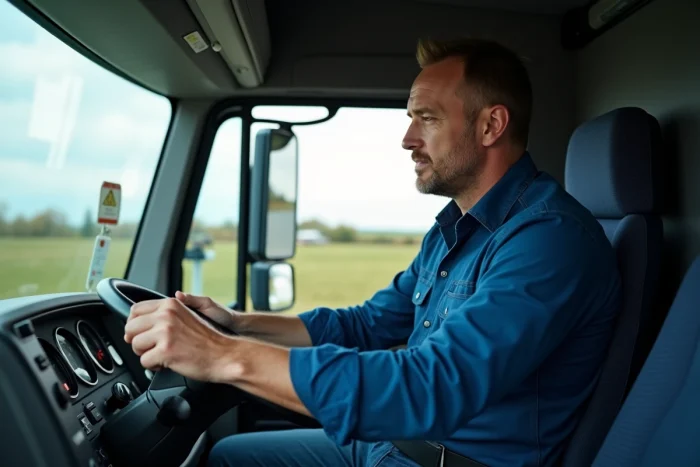
When the orange light comes on the dashboard of the Renault T, it doesn’t just warn; it asserts itself. Between 10 and 15% of fuel remaining: this is the margin, neither more nor less, left by the manufacturer. Depending on the load carried, the weather, or the terrain, this reserve never guarantees the same distance, and few know, to the kilometer, what it actually allows them.
There is a gap between the technical specifications and the reality of the road. Official figures rarely match the experience of truck drivers. Rugged terrain, headwinds, dynamic driving: all these factors disrupt consumption and blur the markers. When the level drops, vigilance must prevail: pushing the limit can be costly and prematurely wear out certain parts of the Renault T.
Understanding the operation of the reserve indicator on the Renault T
On the Renault T, the reserve indicator is not just a simple reminder. It lights up as soon as the fuel quantity falls below a threshold set by Renault Trucks, usually between 10% and 15% of the tank capacity. There’s no question of waiting until the last minute: as soon as the light activates on the dashboard, it’s better to anticipate the refueling stop.
The system relies on a level sensor submerged in the tank. This sensor, connected to the vehicle’s computer, transmits information in real-time. Each version of the Renault T has its own values: depending on the tank size and variations, the reserve ranges from 70 to 90 liters of diesel. These figures can evolve, especially for models adapted for specific uses.
This margin, designed primarily for safety, helps prevent running out of fuel and provides the necessary time to reach a service station. To obtain detailed information on the range of the Renault T with the diesel reserve, a comprehensive file is essential: Diesel reserve of the Renault T, how many kilometers are left – WD Car. This system, far from being ancillary, fits into a logic of rigorous fuel management, particularly over long distances or when stations are scarce.
Some users, overly confident, think they can always go further. Bad calculation: the reserve never offers the same latitude; each trip has its specifics. The terrain, temperature, load, everything influences the possible distance once the light is triggered. Never consider this indicator as a promise, but as an alert signal to be addressed without delay.
How many kilometers are really left when the light comes on?
The question plagues all Renault T drivers: once the reserve light is on, how many kilometers can one still hope for? It’s difficult to answer precisely, as it all depends on the model and the use of the truck.
On the Renault T, the light generally activates when there are between 70 and 90 liters of fuel left. This range, designed for safety, allows for a good margin of maneuver. But the actual reserve range depends on many parameters: the truck’s configuration, the load, driving style, road profile, and even mechanical condition. All these elements weigh in the balance.
On the ground, feedback converges: most drivers note between 100 and 150 kilometers of range after the light comes on. This observation comes from logbooks, which are much more reliable than simple theoretical calculations. Obviously, a fully loaded truck driving at high speed on the highway will see this figure decrease significantly.
Here are the main factors that modify the range on reserve:
- Engine type: Diesel engines, generally more economical, allow for a few extra kilometers after the alert.
- Driving style: A smooth and steady driving style conserves the reserve, while sudden accelerations deplete it rapidly.
- Weather conditions: Extreme temperatures, wind, rain: all these parameters influence fuel consumption and, consequently, the possible distance.
To delve deeper into this topic, the dedicated page on the reserve range of the Renault T breaks down each variable and offers a numerical overview, useful for those who rely on the efficiency of each trip.

Practical tips for managing the reserve and avoiding unpleasant surprises
When the fuel reserve light comes on, attention must be heightened. A few simple gestures can make the difference between a smooth trip and a breakdown on the side of the road. First rule: locate the next service station as soon as the signal appears. On long stretches or at night, caution is essential, as relying on luck has never filled a tank.
Waiting until the last moment to refuel? Risky. Residues accumulated at the bottom of the tank can be sucked up and damage the pump or clog the engine of the Renault T. It’s better to prioritize early refueling at reliable service stations rather than betting on the last isolated pump.
Organization remains the best ally of the driver: keeping a logbook, noting each visit for technical inspection, monitoring the gauge at every restart, all this helps refine the actual knowledge of the consumption specific to their vehicle. Outside temperature, parked position, or type of fuel can sometimes influence the display on the dashboard. Staying attentive to these changes is anticipating the unexpected.
To enhance control over the reserve, adopt these concrete habits:
- Practice smooth driving and avoid unnecessary accelerations to limit fuel consumption when driving on reserve.
- Keep an eye on fuel prices: the differences between stations can weigh heavily on the budget, especially for a professional.
- Consider having the condition of the tank and pump checked regularly during workshop visits to prevent any malfunction.
Managing the reserve of the Renault T is neither a matter of chance nor simple automation. It is learned, refined, and depends on accumulated experience. This is where the difference lies between an unexpected breakdown and a controlled trip, closely aligned with the daily demands on the road.
Ultimately, the range on reserve is never an exact science. But with the right reflexes, the Renault T always promises that little extra margin, the one that makes the difference between uncertainty and control. It remains for each to give this orange light the attention it deserves, to transform each signal into anticipation rather than urgency.