
A whiteboard, a piece of chalk, and with just one click everything disappears: the classroom has vanished, replaced by a mosaic of faces against a blue-gray background. Yesterday, the bell dictated its tempo; today, one must contend with the unpredictable ballet of notifications.
In this new ecosystem, some teachers handle digital tools like seasoned airline pilots, calm and methodical, while others are still searching for the manual in the midst of the flight. Between the promise of multiplied interactions and the frustration of unexpected interruptions, the virtual classroom is shaping its own contours. One question remains: what are the essential allies to ensure that educational magic persists, even when each student is just a thumbnail on a screen?
Teaching remotely: what challenges do teachers face today?
The digital tsunami has not spared the republican school. Overnight, educational continuity became a collective challenge, pushing most teachers to urgently master digital tools previously reserved for a few daring explorers. Virtual classrooms had to be created, remote assignments organized, exchanges secured: the teaching profession has changed its face.
- Technical mastery: training in the use of platforms struggles to keep pace with the general rush. Many improvise, encounter obscure interfaces, and accumulate attempts to access their digital tools. A typical example: these suddenly bewildered teachers facing a connection issue with the Lille webmail, who make repeated attempts without finding an immediate solution.
- Adapted educational resources: finding engaging materials tailored to the diversity of students often involves experimentation. Without the direct gaze of the classroom, it’s hard to tell if the machine captures attention or lets boredom slip away.
- Data protection: the digital management team constantly reminds everyone of the urgency to preserve the confidentiality of exchanges. Using unapproved tools exposes serious vulnerabilities, complicating the equation for teachers concerned about security.
The virtual classroom is not simply about transposing the traditional lesson in front of a webcam: it pushes for a rethinking of autonomous learning, inventing new benchmarks and reclaiming the teaching profession every day. A significant challenge, where each tool becomes an extension of the hand and voice.
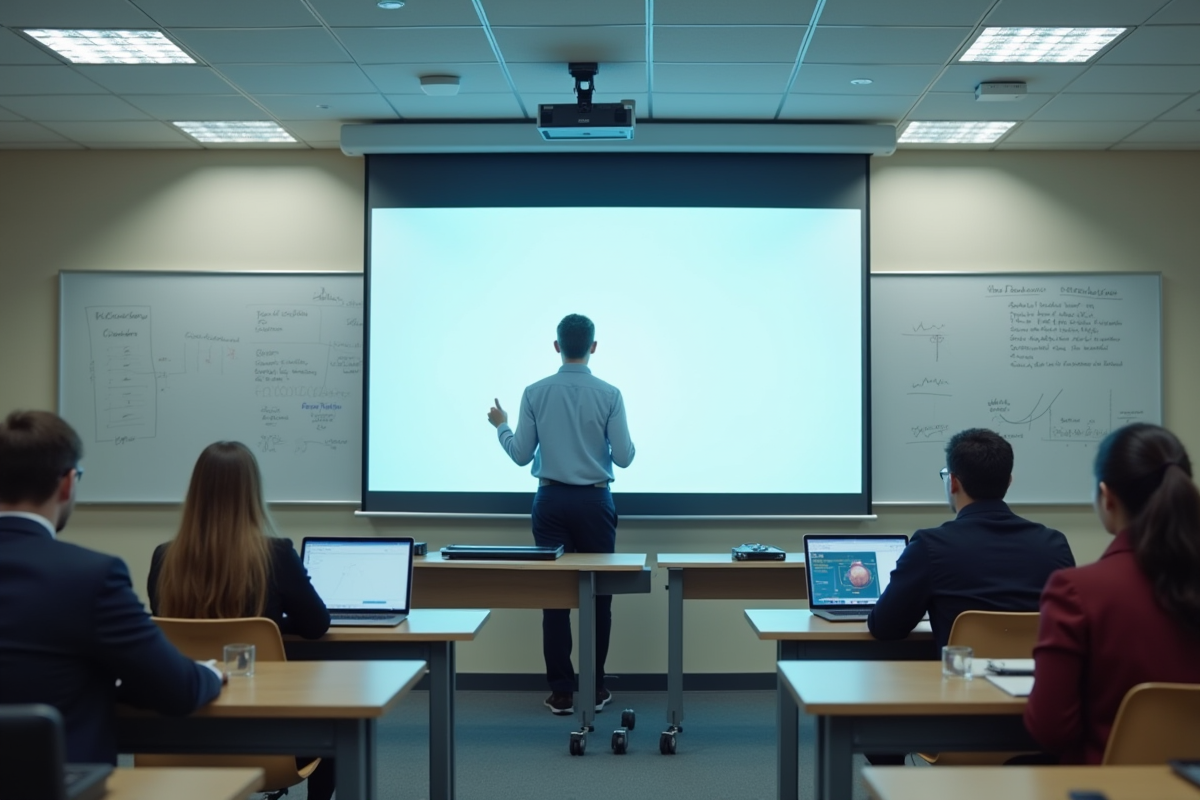
Overview of essential tools for successful remote connection
The teacher’s digital toolbox is rapidly expanding. To ensure continuity of online classes and the quality of exchanges, certain solutions have become indispensable in the arsenal of distance education.
- Learning management platforms: they centralize the organization of content, tracking of assignments, grading, and communication. Their ergonomics, stability, and richness of resources make all the difference in managing a virtual classroom on a daily basis.
- Video conferencing software: these tools bring the remote classroom to life. They enable real-time dialogue, screen sharing, and promote interactivity. Their technical reliability determines the fluidity of exchanges and student engagement.
- Virtual whiteboards: these applications reinvent the pedagogical gesture in the digital space. They facilitate explanation, co-construction of knowledge, and active involvement, even without physical presence.
- Collaborative solutions: shared documents, spreadsheets, online presentations… These tools energize group work, stimulate autonomy and creativity, and strengthen the sense of belonging despite the distance.
But none of this holds without a reliable internet connection: it is the invisible foundation upon which all digital pedagogical construction rests. If the bandwidth falters, the structure wobbles. These tools, in constant evolution, are now shaping the digital daily life of teachers and transforming the learning experience for an entire generation. The classroom has moved, but the challenge remains intact: to pass on the light of knowledge, even through pixels.