
The multiannual energy programming (PPE) now sets a trajectory of 48 GW of photovoltaics and 31 GW of onshore wind by 2030. These targets imply a massive deployment of new renewable production capacities. But how can we measure the consistency between these quantified ambitions and the means actually mobilized on the ground, whether it be network flexibility, financing, or local acceptability?
Renewable targets and flexibility capacities: where is the gap?
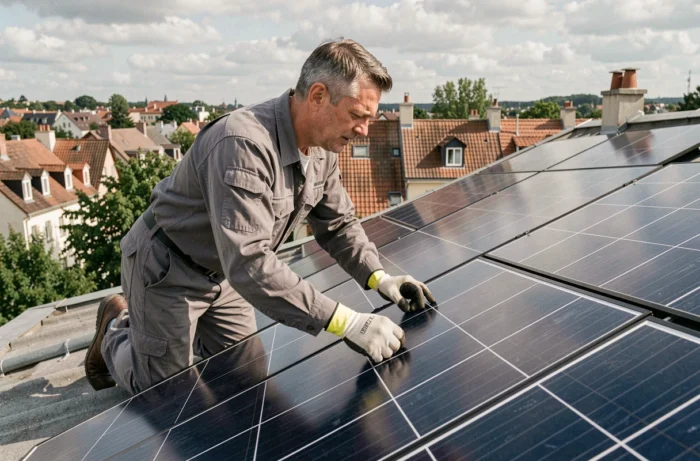
The rapid increase in solar capacities produces a side effect that annual production curves do not immediately show. Photovoltaic development now generates more frequent episodes of negative prices in the wholesale electricity market. In other words, at certain times of the day, production exceeds demand to the point that electricity loses all market value.
This phenomenon reveals a structural limit of the current model. Adding gigawatts of capacity without simultaneously developing storage tools, demand response, and interconnection is like filling a leaky reservoir. Stationary batteries, intelligent demand management, and strengthening interconnection lines between regions become necessary building blocks.
To follow the evolution of these topics over the months, the news from the AG Energie site compiles the regulatory and technical advancements that shape the French energy sector.
| Flexibility lever | Function | Current stage |
|---|---|---|
| Stationary batteries | Store solar surpluses for peak use | Accelerating deployment, capacity still limited |
| Demand response | Temporarily reduce demand to balance the grid | Regulatory framework in place, gradual adoption |
| Cross-border interconnections | Export or import according to production gaps | Projects underway, long construction timelines |
| Demand management (smart grids) | Adapt consumption in real-time to price signals | Local experiments, no generalization |
Local financing of the energy transition: contradictory signals
Local authorities play a leading role in the concrete deployment of the transition. Renovation of public buildings, connection to heat networks, support for citizen renewable energy projects: these initiatives depend on national funding whose sustainability is being questioned.
An open letter published in October 2026 by several transition stakeholders denounces reductions or threats to MaPrimeRénov’, energy savings certificates, and the Heat Fund. The signatories call for multiannual financial planning to avoid budgetary shocks that paralyze ongoing projects.
The problem goes beyond the simple budget envelope. Without visibility for three to five years, construction and renewable equipment installation companies struggle to recruit and invest. RGE (Recognized Environmental Guarantee) craftsmen calibrate their workforce based on anticipated demand. A sudden freeze on aid leads to a chain of cancellations, followed by layoffs in already strained sectors.
Budget items under pressure
- MaPrimeRénov’: the main lever for thermal renovation of private housing, whose scope and amounts are regularly adjusted, sometimes mid-year
- Energy savings certificates (CEE): a mechanism that obliges energy suppliers to finance savings actions, but whose calculation rules are frequently revised
- Heat Fund: an envelope managed by ADEME to support renewable heat networks, whose amount stagnates in the face of rising construction costs
- Renewable sectors (wind, biogas, geothermal): feed-in tariffs and calls for tenders whose volumes directly condition the profitability of projects
Electrification of uses and new consumers: pressure on the grid
The gradual ban on gas heating in new buildings accelerates the shift in demand towards electricity. This regulatory tightening is part of a decarbonization logic, but it increases winter peak electricity demand, a period when the grid is already under the most strain.
At the same time, the growth of data centers is becoming a standalone energy planning issue. The power needs of these infrastructures, driven by the development of artificial intelligence, compete directly with sobriety objectives. A large data center consumes as much as a medium-sized city.
This dual pressure, residential and digital, necessitates a rethink of grid management. In just a few years, France has shifted from a model where electricity consumption stagnated to a scenario of sustained growth. Network managers must anticipate heavy investments in substations, high-voltage lines, and regulation systems.

Local acceptability of energy infrastructures: the underestimated lock
National objectives regularly clash with local opposition. Wind farms, power lines, agricultural methanizers: each project generates administrative appeals that extend timelines by several years. Without an effective consultation mechanism, the trajectory of the PPE remains theoretical.
The gap between the ambitions set out in law and the reality on the ground is not solely due to a rejection of renewable energies. It also reflects a deficit of perceived economic benefits for local residents. Projects that involve residents in the capital (cooperative societies, participatory financing) encounter less resistance than those led by developers from outside the area.
Factors that promote local acceptance
- Financial participation of residents in the project (shares, local dividends)
- Consultation from the study phase, before the building permit application
- Tax benefits directed towards the host municipality (tax on wind turbines, land rents)
The French energy transition is advancing on several fronts simultaneously, but the coherence between installed capacities, network flexibility, and financing remains fragile. Upcoming budgetary and regulatory decisions will determine whether the PPE objectives for 2030 represent an operational roadmap or a statement of intent.