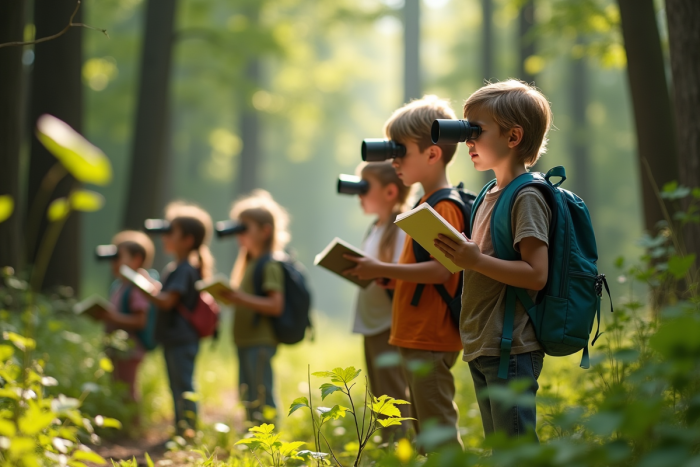
In France, the law mandates the teaching of biodiversity from primary school, but only 42% of students can identify more than ten local species. The gap between theoretical knowledge and field experience persists, despite the official integration of nature outings into school curricula.
Some educators prioritize direct observation of animals to develop curiosity and respect for living beings. This approach, still marginal, disrupts traditional methods and encourages a rethinking of children’s role in discovering the animal world.
Why raising children’s awareness of biodiversity changes their perspective on nature
The learning of biodiversity from a young age shakes up how children perceive their environment. Observing wildlife and flora is much more than memorizing names on a sheet. It’s crossing paths with a busy bee, meeting the gaze of a gosling, or stopping in front of a butterfly’s dance. These chance encounters awaken curiosity, nourish wonder, and open the door to a nascent ecological consciousness.
The richness of life cannot be reduced to a simple list of species to learn. It is discovered in the silence of a undergrowth, when a child tries to recognize a bird’s song, or marvels at the metamorphosis of a salamander. It is in groups, guided by a passionate educator or a naturalist, that they learn to look differently, to differentiate, to name, and to understand the subtle connections of life. This collective journey stimulates creativity, mutual aid, and listening.
Initiatives like those of the La main à la pâte Foundation, WWF, or UNICEF testify to this: environmental education takes on a concrete and lively dimension. The goal is not limited to transmitting knowledge. It is about training true explorers, capable of being moved by a discreet frog or following the flight of a pollinator. Biodiversity then becomes a field of exploration, a living heritage to discover and defend, where every encounter, from the bee to the gosling, truly matters.
Games, walks, little challenges: concrete ideas for observing wildlife while having fun
The observation of wildlife invites you to go outside, to move away from abstraction. A garden, a clearing, a mountain path become adventure grounds. With binoculars in hand or an observation notebook, everyone sharpens their gaze. Silence becomes a strength. Moving slowly, opening your ears wide, being discreet: these simple gestures reveal the life bustling all around.
Here are some ideas to transform every nature outing into a playful and educational experience:
- Start an identification challenge: who can recognize the most species of birds or insects in a limited time?
- Try land art: create an ephemeral artwork with elements gathered on site, while remaining attentive to the signs of life emerging around.
- Build together a shelter for animals or an insect hotel. Observing the comings and goings of pollinators, ladybugs, or ants develops patience and observation skills.
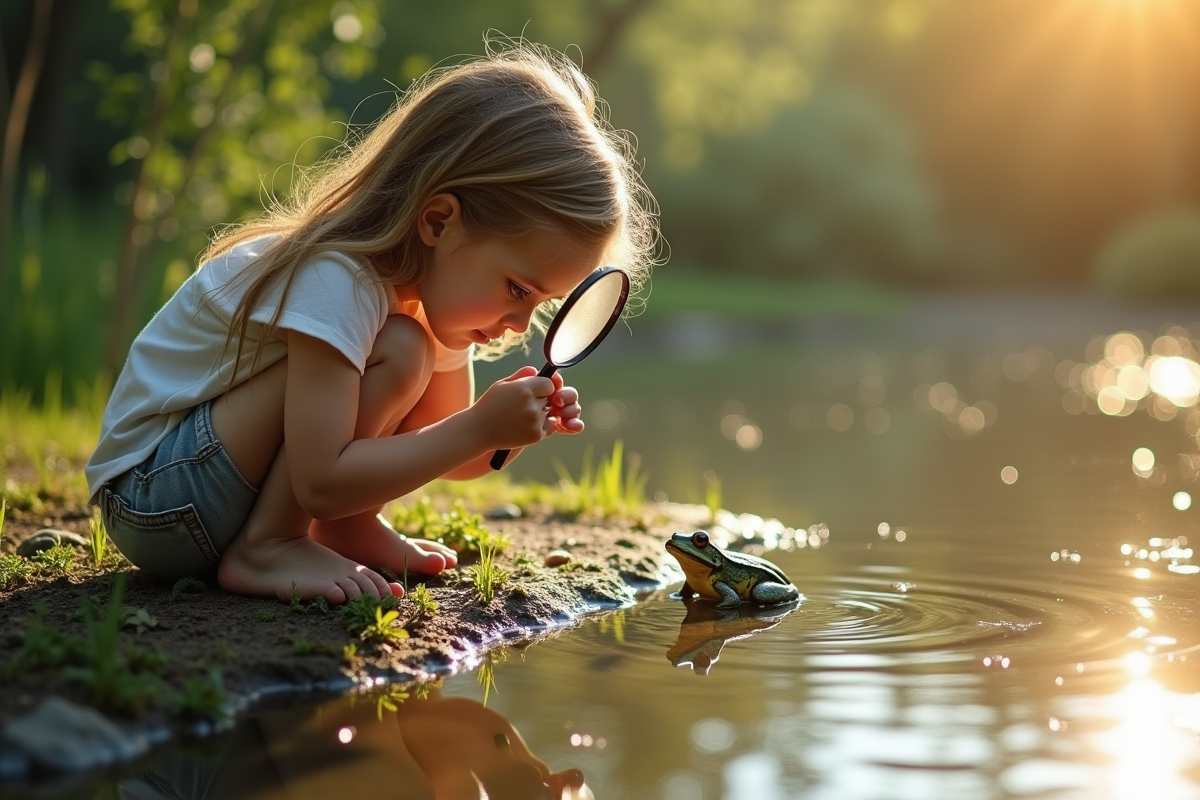
In the forest, every walk quickly turns into an investigation. Tracks in the mud, lost feathers, broken shells: all clues left by the inhabitants of the area. Testing the water quality of a stream, observing a salamander with a magnifying glass, or photographing a squirrel sharpens critical thinking and curiosity. We think of Fred and Marc Jardot, wildlife photographers, who share their passion for life. In France, encountering the Pottok in the Basque Country or observing a marmot in the Alps leaves lasting memories.
The experience grows when shared. Observing wildlife is about learning together, cooperating, respecting life in all its forms. The adventure often begins right in front of your home, and every discovery, no matter how small, changes the way we look at nature.