
A tradesperson in the Cantal who drives 40,000 km a year in a Crit’Air 2 diesel van has different concerns from a Lyon-based executive with a plug-in hybrid. The first relies on their engine for towing, driving on country roads and making deliveries in town. The second hasn’t thought about diesel in a long time.
Between these two realities, diesel still accounts for a huge share of vehicles on French roads, even though its share of new car sales has plummeted. As of January 1, 2026, diesel vehicles still make up 46.1% of cars on the road, according to SDES figures reported by Les Numériques, and the fleet has an average age of 11.8 years.
Euro 7 and diesel: what will actually change at the end of 2026
There is often confusion on this point: many diesel owners think the Euro 7 standard will force them to upgrade or replace their vehicle. That is not the case. Euro 7 does not apply to vehicles already on the road. The regulation applies to new types of cars and light commercial vehicles approved from November 29, 2026, and then to all new vehicles from November 29, 2027.
Technically, Euro 7 keeps the exhaust emission limits set by Euro 6. The changes expand the scope of testing: monitoring finer particles, regulating particles emitted by brakes and tire wear, and strengthening the durability requirements for emissions-control systems. For manufacturers, this means higher approval costs. For owners of Euro 5 or Euro 6 diesel vehicles, nothing changes immediately from a regulatory standpoint.
For a detailed overview of upcoming regulatory deadlines and their impact on the market, see the future of diesel cars on Ma Future Voiture.
The key takeaway is that the end of new diesel cars does not mean the end of diesel on the road. The 2035 deadline marks the end of sales of new combustion-engine vehicles in the European Union, not a ban on driving a diesel vehicle that is already registered.
Used diesel cars in rural areas: resale value depends on ZFE geography
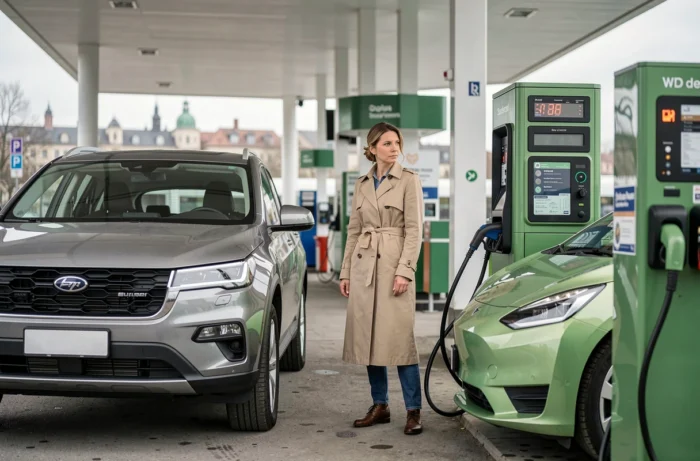
Consider a real-world example. A livestock farmer based in Puy-de-Dôme buys a used Crit’Air 2 diesel SUV for €14,000. They drive 30,000 km a year, mostly on departmental and national roads. The vehicle is perfectly suited to this use: reasonable fuel consumption, enough torque for towing, and a range of more than 800 km on a full tank.
The problem arises when they need to travel to Lyon or Clermont-Ferrand. Low-emission zones (ZFEs) impose restrictions that vary from one metropolitan area to another. A Crit’Air 2 vehicle may be allowed to circulate freely in some cities while being banned in others during peak hours—or even at all times, depending on the local restriction schedule.
This situation directly affects resale value:
- A Crit’Air 2 diesel retains its value in rural areas where no restrictions apply, because local demand remains strong for vehicles with long range and low running costs
- The same vehicle loses value as soon as a potential buyer lives near a city with a strict ZFE, because they will have to contend with increasingly restrictive bans
- The depreciation of a used diesel depends as much on the postal code as on the mileage, making any nationwide estimate unreliable
For a rural buyer who never drives into a ZFE, a used diesel remains an economically sound choice. For someone who splits their time between the countryside and a city, the calculation gets more complicated with every new municipal restriction.
The real cost of diesel in 2026: fuel, maintenance and taxes
Diesel is no longer the clear-cut winner at the pump that it once was. The price gap with unleaded gasoline has narrowed considerably in recent years. When it comes to maintenance, a diesel engine generally costs more to maintain than an equivalent gasoline engine: diesel particulate filter, EGR valve, and AdBlue system on newer models.
As for taxes, the trend is clear. Tax benefits for diesel are gradually disappearing, whether through the TVS for businesses or the ecological penalty scale. A new Euro 7 diesel will include additional emissions-control costs, which will be reflected in its list price.
The numbers still add up in one specific scenario:
- Annual mileage above 20,000 km, mainly on roads and highways
- A recent used vehicle (Euro 6d) bought for under €20,000
- Use outside ZFEs or in a ZFE that still allows Crit’Air 2 vehicles
Below 15,000 km a year, fuel savings no longer offset the higher maintenance costs or faster depreciation. A gasoline or hybrid powertrain then becomes a better choice in terms of total cost of ownership.
Diesel traffic is declining, not just sales
One often-overlooked indicator confirms this underlying trend. According to government statistics reported by L’Automobile Magazine, diesel vehicle traffic declined in 2025, while traffic from other powertrains increased. It’s not just diesel sales at dealerships that are collapsing: the number of kilometers driven on diesel is also falling. The two curves are converging.
Keep or sell your diesel: the deciding factors
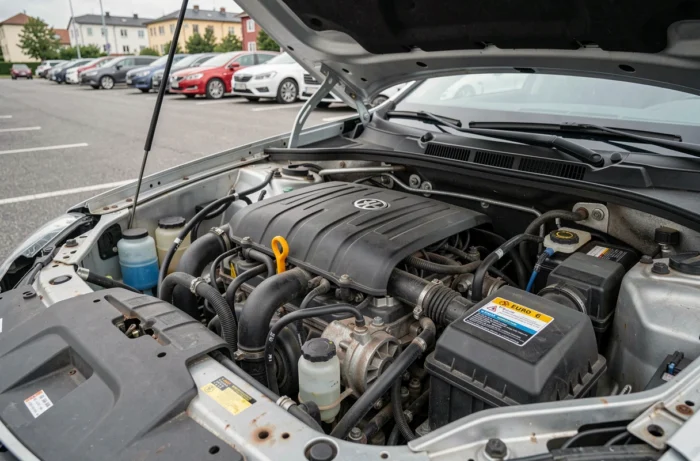
The question isn’t whether diesel will disappear (it will remain on the road for at least another decade), but whether keeping your own vehicle is still the most cost-effective choice. Three factors are enough to decide.
The first is mileage. Above 20,000 km a year on the road, diesel still offers a real fuel-efficiency advantage. Below that, it no longer makes sense.
The second is the Crit’Air sticker. Crit’Air 3 vehicles and above will face increasingly strict restrictions in the years ahead. Selling a Crit’Air 3 diesel now will bring in more than waiting until 2028.
The third is geography. If you live and drive exclusively outside ZFEs, regulatory pressure remains low. If you regularly need to access a city, every new round of municipal restrictions further erodes the vehicle’s value and everyday practicality.
Diesel isn’t dead, but its range of uses is shrinking every year. For people who drive a lot, stay away from city centers and own a recent vehicle, it remains a reliable, economical option. For everyone else, the window of relevance is closing.